
Centennial Series: Honoring the Past, Inspiring the Future
The Record | Volume #144 – Issue #1 – Spring 2025
By Tabitha Parent
For 169 years, Sigma Alpha Epsilon has upheld the values of friendship, scholarship, leadership, and service. Today, these ideals are nowhere more clearly embodied than within the walls of the Levere Memorial Temple (LMT), a Gothic-style structure (now the seat of the Fraternity’s operations in Evanston, Illinois) erected between 1929 and 1930 as a lasting tribute to the Fraternity’s members who served their country during World War I (and other wars). While the LMT was born from a deep desire — perhaps even a duty — to honor Brothers who made the ultimate sacrifice for their country, its founders ensured that its purpose would extend far beyond remembrance.
At the 70th Anniversary Convention held in Boston, Massachusetts, in December 1926, the Supreme Council established the Levere Memorial Foundation of Sigma Alpha Epsilon (now known as the Sigma Alpha Epsilon Foundation). The Levere Memorial Temple was so central to the Supreme Council’s vision for the SAE Foundation that its first three “Objects and Purposes” were dedicated solely to defining and preserving the LMT’s role within Sigma Alpha Epsilon for generations to come.
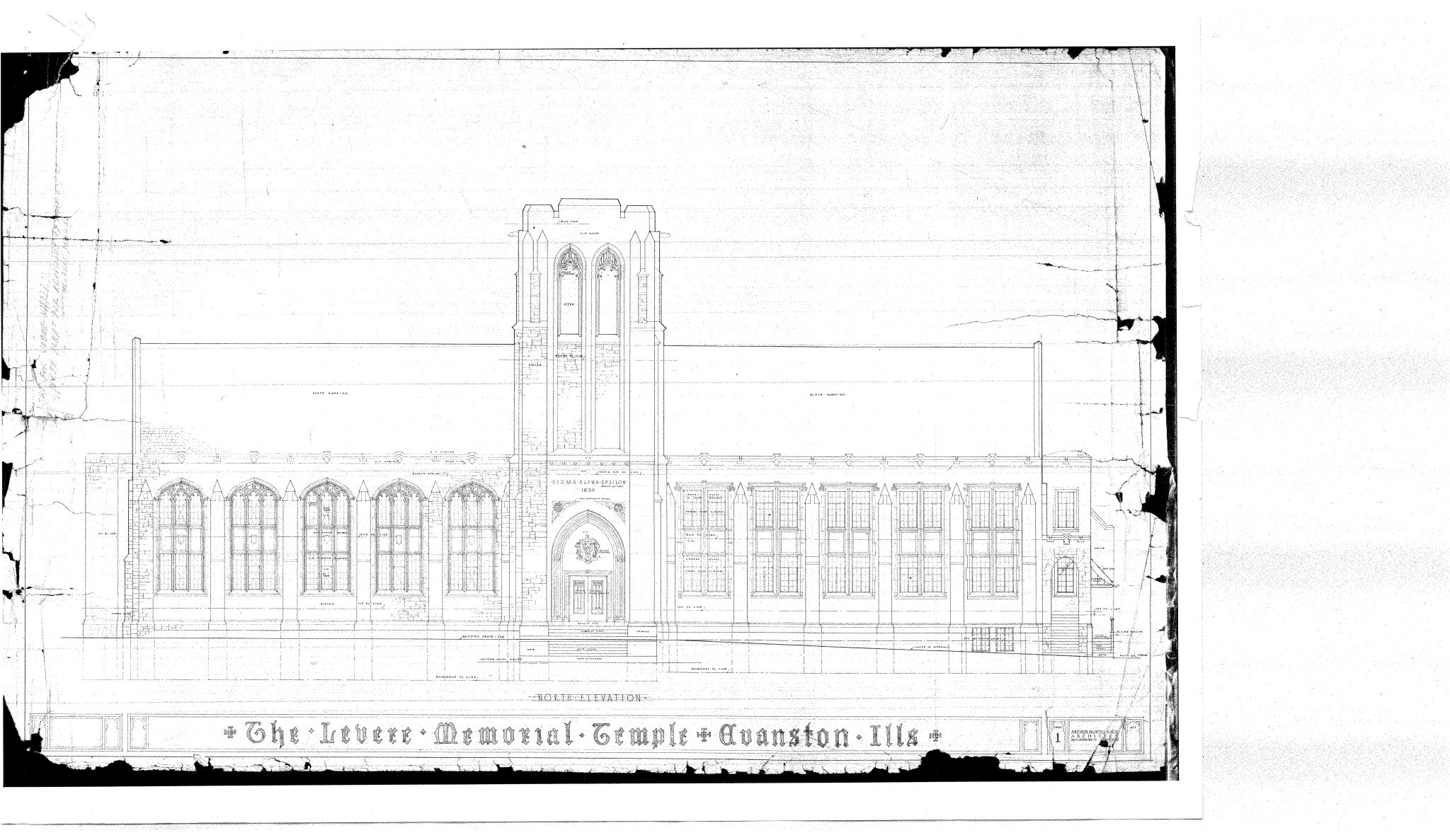
1. To erect and maintain a memorial temple in honor and memory of members of Sigma Alpha Epsilon who served their country on land or sea and rendered other distinguished and patriotic service.
The Levere Memorial Temple’s genesis traces back to World War I’s aftermath. In June 1919, during the 63rd Anniversary Victory Convention in Buffalo, New York (the first post-war SAE Convention), an exploratory committee was formed to create a memorial honoring SAE members who died in the war. This initiative, led by William C. Levere (Northwestern 1897), culminated in the designation of an exploratory committee to establish the LMT. Now, nearly 100 years later, the LMT still stands — in memory of those same Brothers who gave their lives for their country.
In its early years, visitors used the Peace Chapel in the LMT as a site to honor those who died in World War I. Since then, its purpose has expanded, and additional memorials have been added to the chapel to honor Brothers who died in the Civil War, World War II, the Korean War, the Vietnam War, the Persian Gulf War, and those who perished on 9/11 and in the resulting conflicts in Afghanistan and Iraq. Additionally, another memorial honors Brothers who served as law enforcement officers.
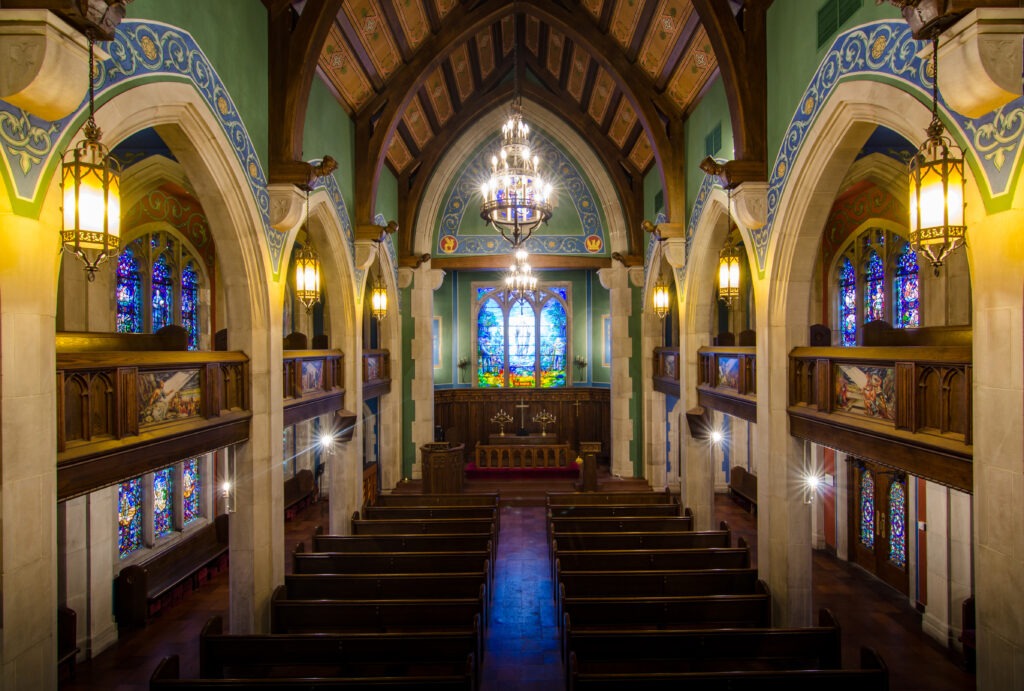
2. To maintain therein a memorial chapel, a library, museum, and archives.
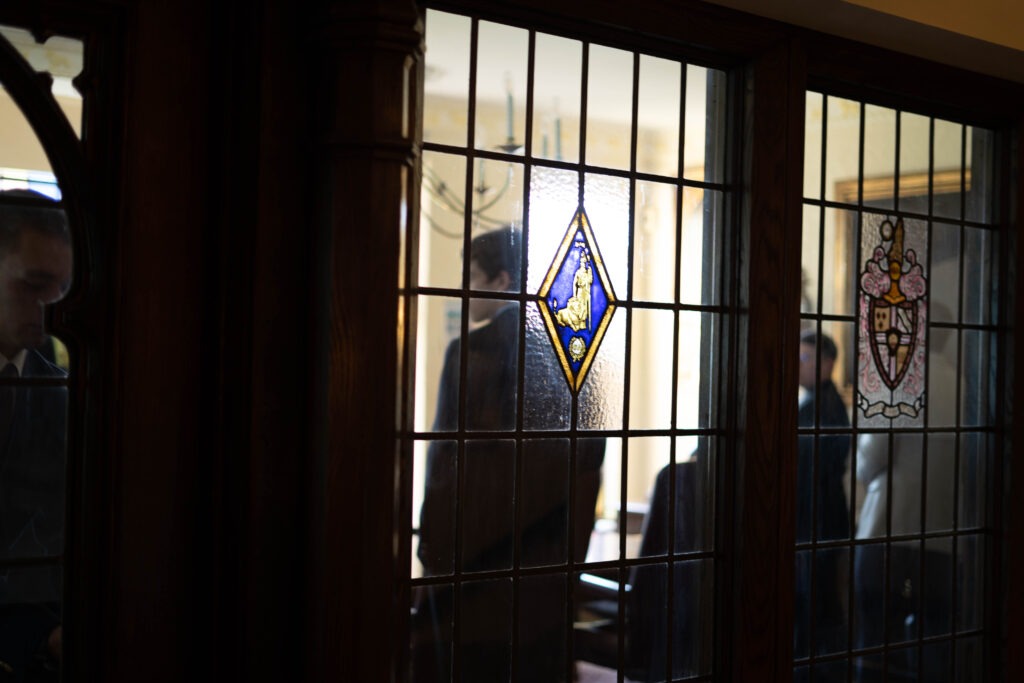
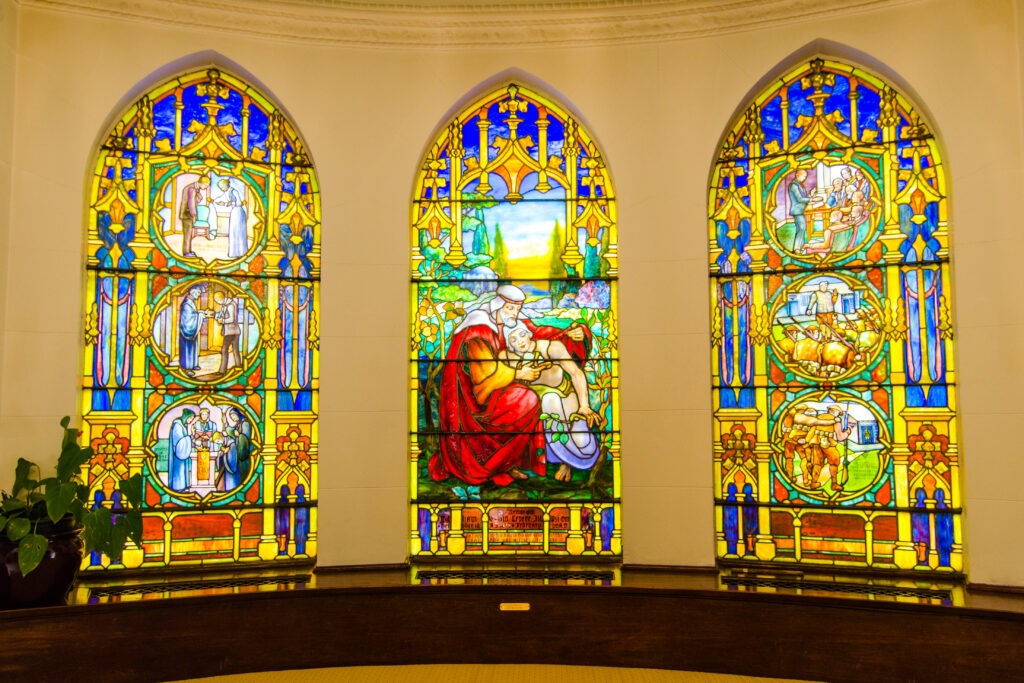
To this day, the memorial Peace Chapel is adorned with brilliant, themed stained glass windows crafted by renowned artist Louis Comfort Tiffany. These windows are portals to moments in time, illuminating the chapel’s walls, which are bedecked with artwork depicting instances from the Fraternity’s past.
The chapel’s vaulted ceilings, stone archways, and dark wood interior lend themselves to an atmosphere of solemn reverence and quiet reflection. Rows and rows of wooden pews extend toward the altar, guiding the eye to the intricate stained glass window that bathes the chapel in colorful light. Delicate chandeliers hang from the ceilings, illuminating the rich stonework and elaborately painted walls.
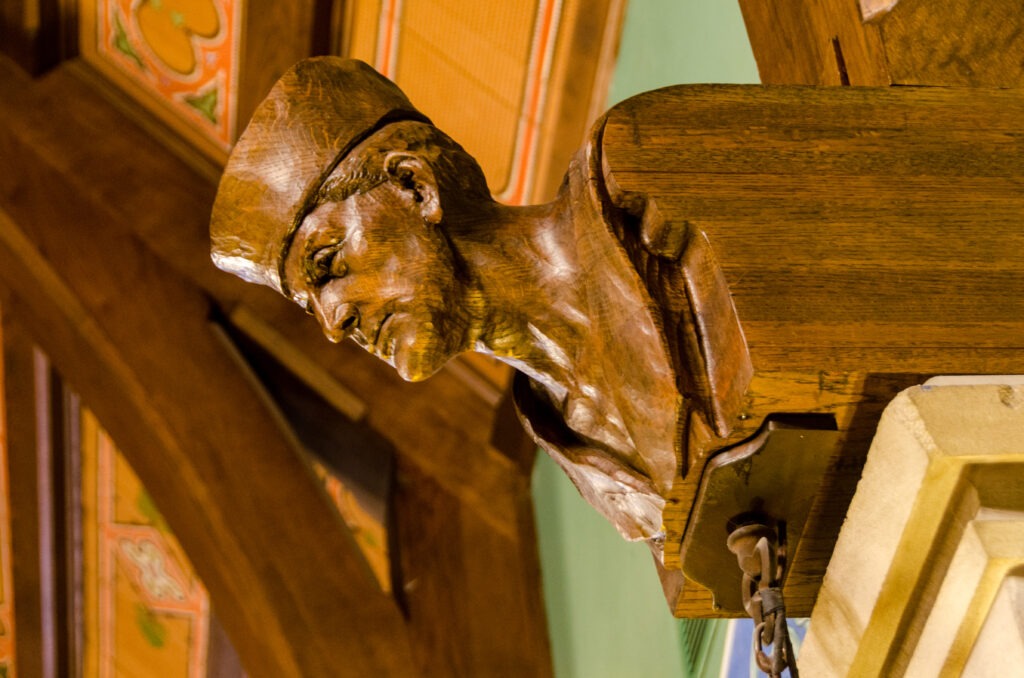
To embellish the Chapel’s interior, Judge Alfred K. Nippert (Cincinnati 1896) , who served as Chairman of the Building Committee for the Levere Memorial Temple, sought out Johannes Waller (Northwestern 1936), a German painter from Munich, bringing him to America to work on the Peace Chapel and other murals throughout the building. Over the course of nine years, Waller and an assistant meticulously transformed the space, using imported German paints, to create the breathtaking designs that are still visible in the chapel space today. Adding to the grandeur of the space, at the base of the ceiling arches, twelve carved solid oak busts guard the space. Designed and sculpted by Chicago artist Joseph Dux, these solemn figures represent soldiers from all American wars.
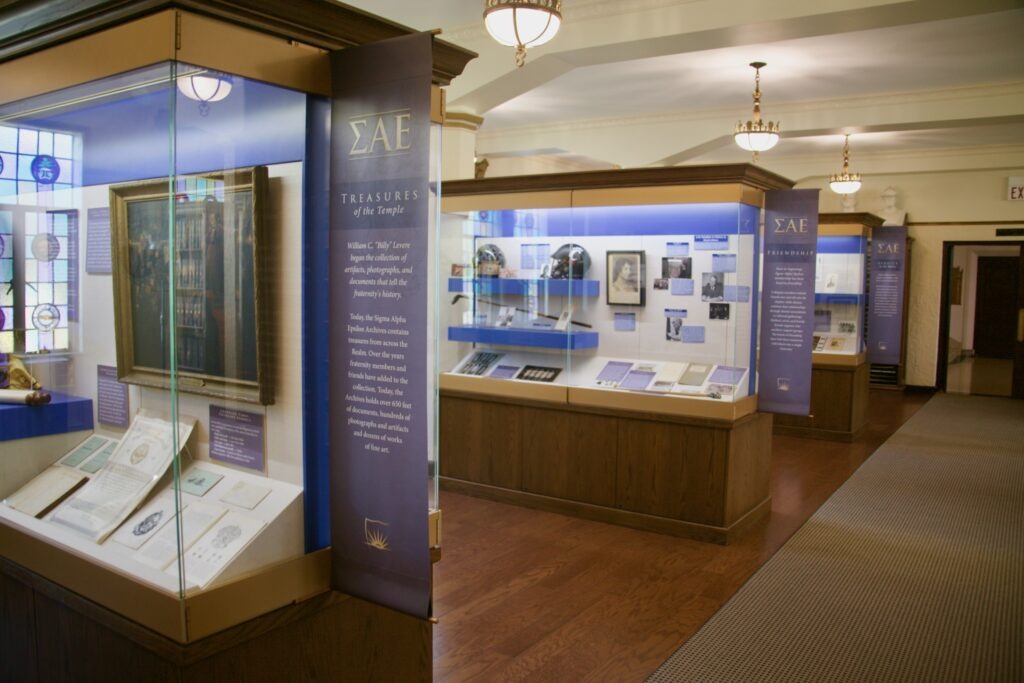
3. To preserve documents, war records, works of art, and related objects for the encouragement of historic research, particularly as to the history of education and college organization.
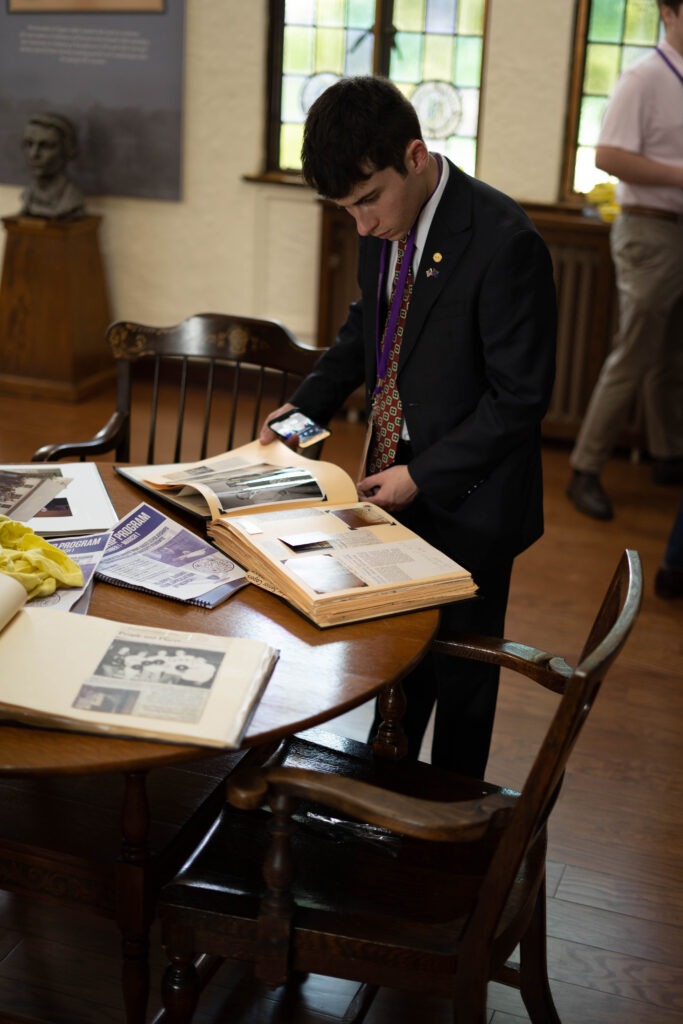
For a Fraternity as distinguished and historically rich as SAE, the addition of the aforementioned library, museum, and extensive archives to the Levere Memorial Temple was essential. The LMT houses a vast collection of memorabilia — including badges, letters, portraits, and personal effects from some of the Fraternity’s most notable members. Among the pieces stored are the shovel used at the LMT’s groundbreaking ceremony in 1929, Lucy Pattie’s original headstone, William C. Levere’s YMCA uniform from World War I, and the Deagan Tower Chimes player. The library contains an extensive collection of scrapbooks that document the unique history of each chapter, featuring photographs, newspaper clippings, composite photos and personal accounts from Chapter Brothers. If an SAE wrote a book, it is likely that the library holds a copy.
Objects Four and Five, while not directly related to the Levere Memorial Temple itself, have played a crucial role in sustaining both the SAE Foundation and the building over the years.
4. To establish and grant scholarships and loan funds to worthy and needy students in various universities, colleges, and other institutions of learning.
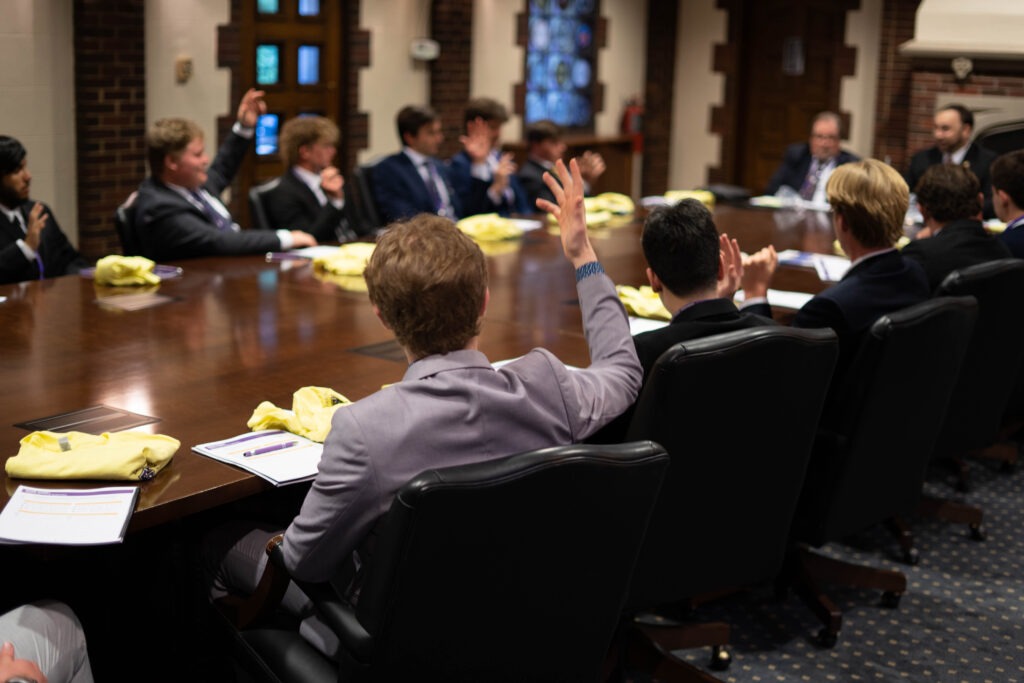
By providing scholarships and loan funds, the SAE Foundation has supported generations of students in their academic and leadership pursuits by helping to ease the financial burden of higher education. For example, some funds from the SAE Foundation ensure that students from Chapters across the country are able to attend Leadership School, frequently held at the LMT, ensuring that members are able to interact with the building and situate themselves within its history.
5. To receive funds, donations, bequests, legacies, endowments, and gifts, both real and personal for the furtherance of the objects and purposes of the Foundation.
The 64th Anniversary Convention held in St. Louis, Missouri, in December 1920 moved to professionalize the Fraternity, designating, among other things, the National Endowment Fund, which henceforth made it possible for the Fraternity to ask alumni for donations. As Americans all across the country entered a period of recovery coming out of World War I, donations began to pour in from SAE members across the country. No part of the Levere Memorial Temple that exists today would be possible without the generosity of donors who recognize the importance of preserving and enhancing the legacy of Sigma Alpha Epsilon. Through endowments, gifts, and contributions, supporters help maintain the LMT’s mission and ensure its halls continue inspiring and educating for years and years to come.

– This article marks the first in a series of articles that will celebrate the upcoming 100th Anniversary of the Levere Memorial Temple and delve deeper into its history, significance, and continued impact on Sigma Alpha Epsilon. Through this series, we invite you to explore the rich traditions and meaningful contributions that have shaped Sigma Alpha Epsilon and the historical legacy behind the LMT that stands as a beacon of our Brotherhood today. The original “Objects and Purposes” of the Levere Memorial Temple Foundation are as relevant today as they were nearly 100 years ago. Whether or not you’ve had the opportunity to visit the Levere Memorial Temple in person, we hope these insights will illuminate the profound importance of this cherished institution to Sigma Alpha Epsilon and help us preserve it and SAE’s legacy for another 100 years and beyond.