

By: Dr. Anthony V. Mack
Raising a young man in 2026 is not easy. Most young men describe life as stressful, pressured, and uncertain. When an 18-year-old leaves home for college, those feelings only intensify. Many parents search desperately for the magic formula: something that will help their newly adult children overcome isolation, find purpose, and set them on an upward trajectory for life. Parents need not look far, as the solution may be hiding in plain sight.
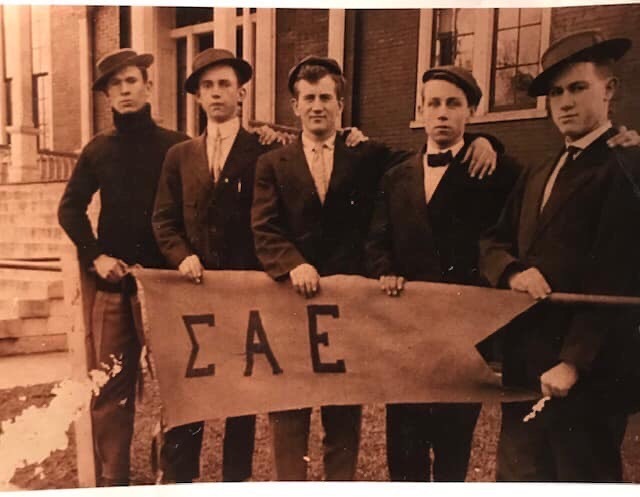
For two centuries, college fraternities have fostered brotherhood and promoted the personal growth of young men. Yet many parents see only the negatives. Headlines about hazing, binge drinking, and toxic behavior have made them wary. But these sensational stories paint an incomplete picture of what fraternity offers to young men.
At a moment when young American men face unprecedented challenges, fraternities offer exactly the structured community many need to thrive. Evidence indicates that fraternity members outperform their unaffiliated peers academically. Fraternity members show significantly higher learning gains in their first year of college and experience higher retention and graduation rates.
This isn’t accidental. Most fraternities maintain academic standards that exceed university requirements including minimum GPAs for membership, officer positions, and social events. Many chapters offer study sessions, maintain libraries of course materials across majors, and provide academic incentives. These aren’t just rules. They’re guardrails that help young men navigate the competing demands of college life. Campus standards of excellence nationwide typically require that the average GPA of fraternity men exceed the all-male student average.
Academic performance tells only part of the story. The data on America’s young men’s mental health is alarming. Studies show that men aged 16 to 28 report social isolation and loneliness among their top three challenges. Nearly half of Gen Z men are considered “low social,” spending five hours or less per week in person with friends or participating in social activities. This isn’t just about feeling lonely or sitting alone, what we are seeing is a full-blown public health crisis.

Yet young men who belong to a college fraternity tell a strikingly different story. They overwhelmingly report good mental health: 53 percent positive compared to just 41 percent of young men overall. They’re significantly more likely to say their lives are going the way they envisioned (61 percent of fraternity members versus 37 percent of non-affiliated men). Seventy-one percent of fraternity men have a male mentor, compared to just 42 percent of non-affiliated men. And 64 percent of fraternity men have three or more close friends, compared to only 36 percent of their unaffiliated peers.
These numbers aren’t marginal differences. They represent fundamentally different lived experiences for young men navigating one of life’s most challenging transitions.

The antidote to young men’s happiness are natural opportunities for in-person connection. And fraternities hand those opportunities to young men on a silver platter. Brotherhood activities, community service, intramural sports, and social events. After joining, young men are instantly connected with peers from different backgrounds, beliefs, and life experiences. This broadens perspective and develops crucial social-emotional skills that many young men lack.
Perhaps most importantly, fraternities develop tomorrow’s leaders through hands-on experience. Young men learn to manage organizations, plan events, oversee budgets, lead teams, and solve problems; all skills they’ll use throughout their careers. Beyond hard skills, fraternity leadership develops the soft skills employers prize, like critical thinking, creativity, collaboration, and communication. In an economy that increasingly values these abilities, fraternity experience provides a crucial edge.
The proof extends beyond recent studies. Consider that 85 percent of Fortune 500 executives, 76 percent of all members of Congress, and 85 percent of Supreme Court justices since 1910 belonged to fraternities. Nearly every president and vice president since social fraternities were founded has been a member. Across more than 730 college campuses, 85 percent of student leaders are affiliated with Greek-lettered organizations.
This doesn’t mean fraternities are perfect. Parents should absolutely engage in the process by asking hard questions about a chapter’s academic profile, values, culture, leadership, and conduct record. They should discuss risk management, accountability, and the chapter’s relationship with university administration. The best chapters welcome these conversations.
However, at a moment when young men face multiplying challenges, from academic pressure to social isolation to a crisis of purpose, fraternities offer something increasingly rare. They hand young men a community dedicated to their development as students, friends, citizens, and leaders. And for parents willing to look beyond the headlines, it gives them the peace of mind that comes from knowing their sons aren’t navigating these formative years alone.
——

Dr. Anthony V. Mack is Director of Chapter Services for Sigma Alpha Epsilon (SAE). SAE is one of the country’s oldest and largest fraternities. Over 350,000 young men have been initiated among SAE’s 220+ chapters.