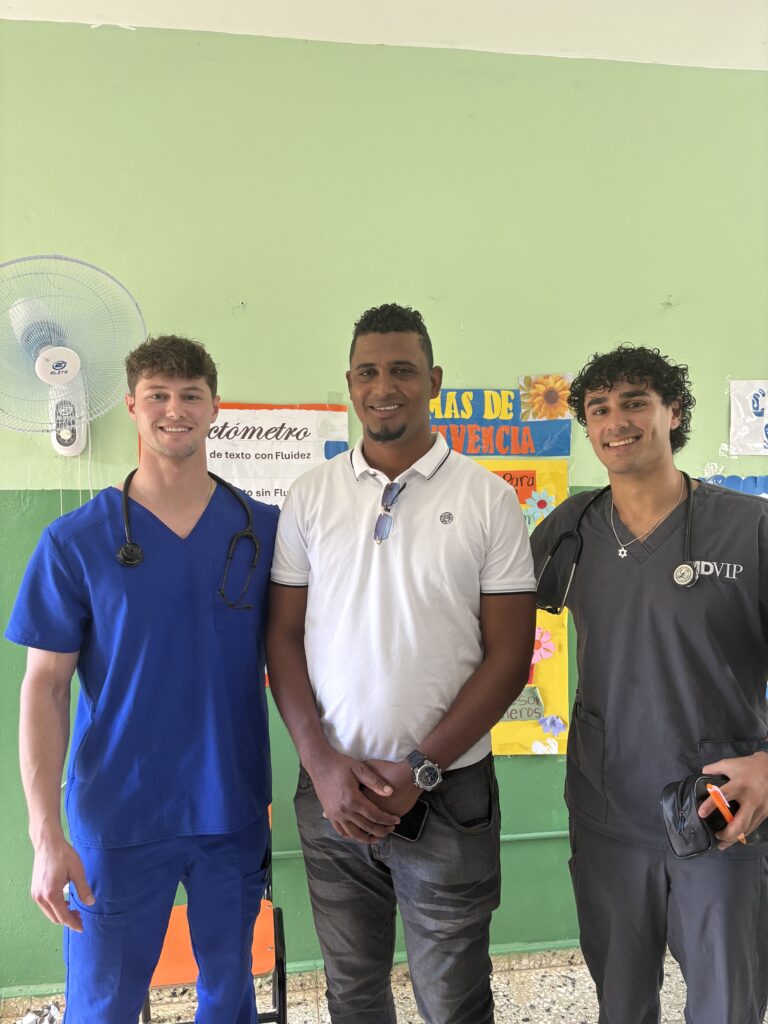
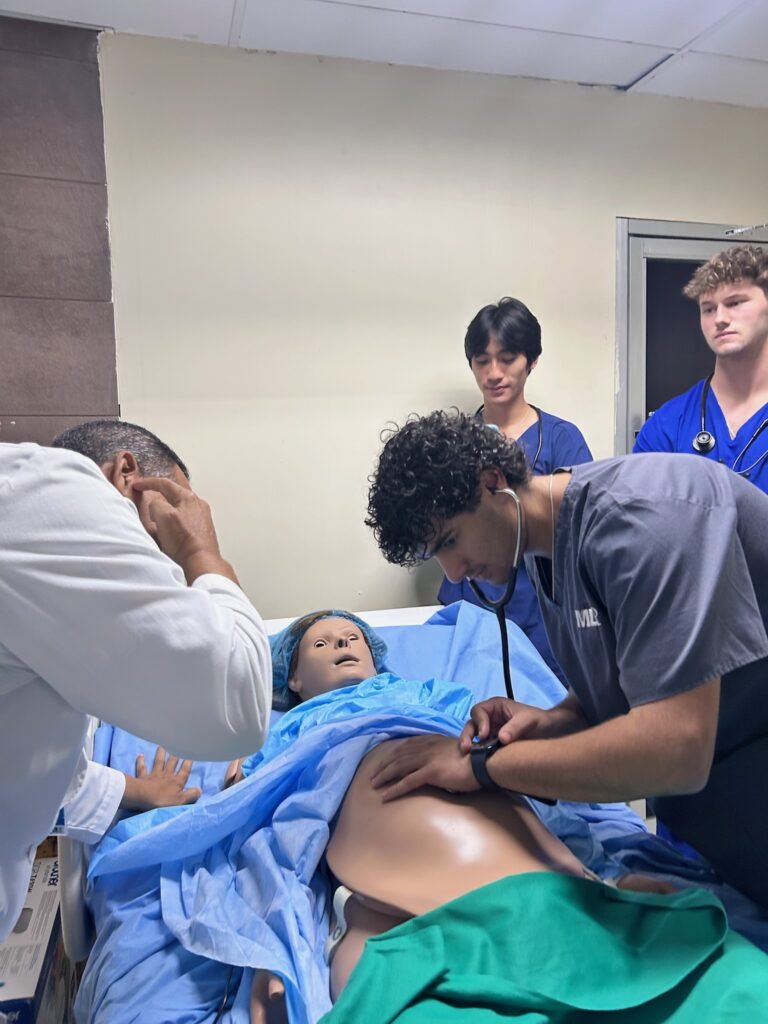
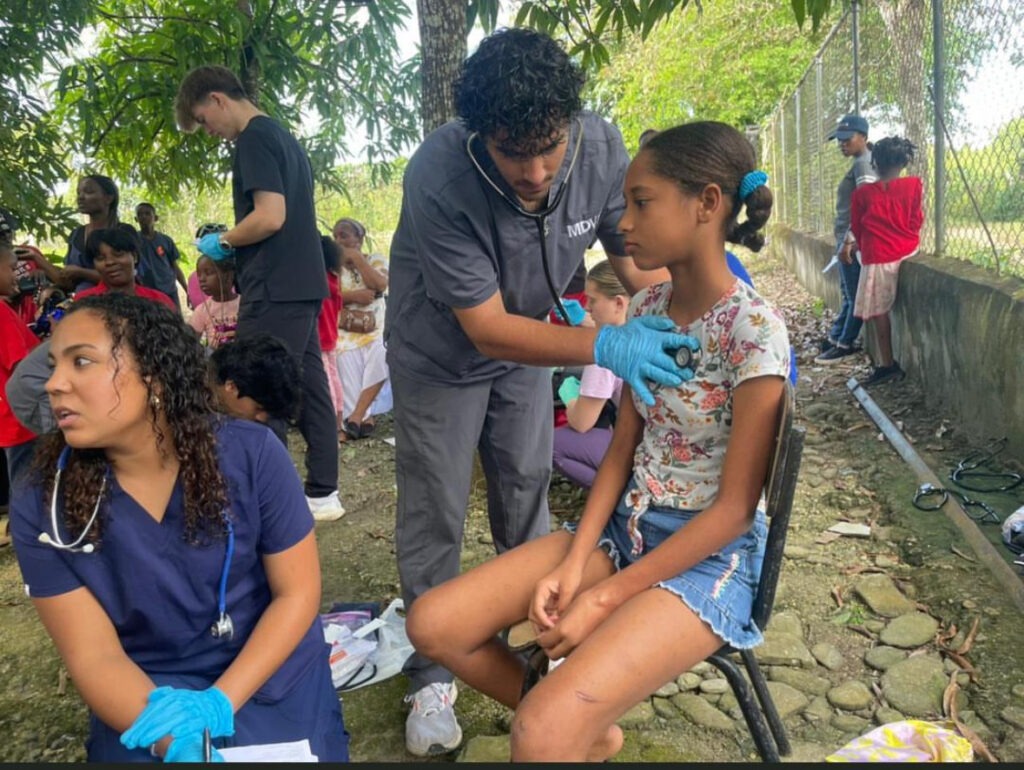
Brothers Vinny Naccarato and Jackson Frankel recently represented the Connecticut Beta chapter on a medical service trip to the Dominican Republic through UConn Bridge to Guanin, demonstrating the true impact of service beyond campus. Over the course of 10 days at the Guanin Center, these dedicated brothers helped provide essential healthcare access to communities that do not regularly receive medical care. Their work included supporting local clinics, triaging patients, shadowing physicians, and delivering medicine to those in need.
Below, they answered questions and shared their experiences from this trip.
What inspired you to participate in the medical service trip through UConn Bridge to Guanin?
Vinny: “I’ve had the opportunity to observe a range of healthcare settings in the United States and see how physicians care for patients who have full access to medical services. Through Bridge to Guanin, I wanted to better understand what patient care looks like in a setting with limited access to healthcare. Growing up hearing phrases like “third world” also made me want to see the realities of low-income countries firsthand and learn beyond stereotypes.”
Jackson: “I was inspired to participate in the medical service trip through UConn Bridge to Guanin because I wanted to learn more about how healthcare systems operate in different countries and gain a broader understanding of global medicine. Experiencing healthcare in a different cultural and economic setting allowed me to see challenges and approaches that differ from those in the United States. I also wanted an independent, hands-on experience that would help solidify my passion for healthcare. This trip confirmed my commitment to the field and strengthened my desire to continue pursuing a future in healthcare.”
Can you describe a moment at the Guanin Center that had a lasting impact on you?
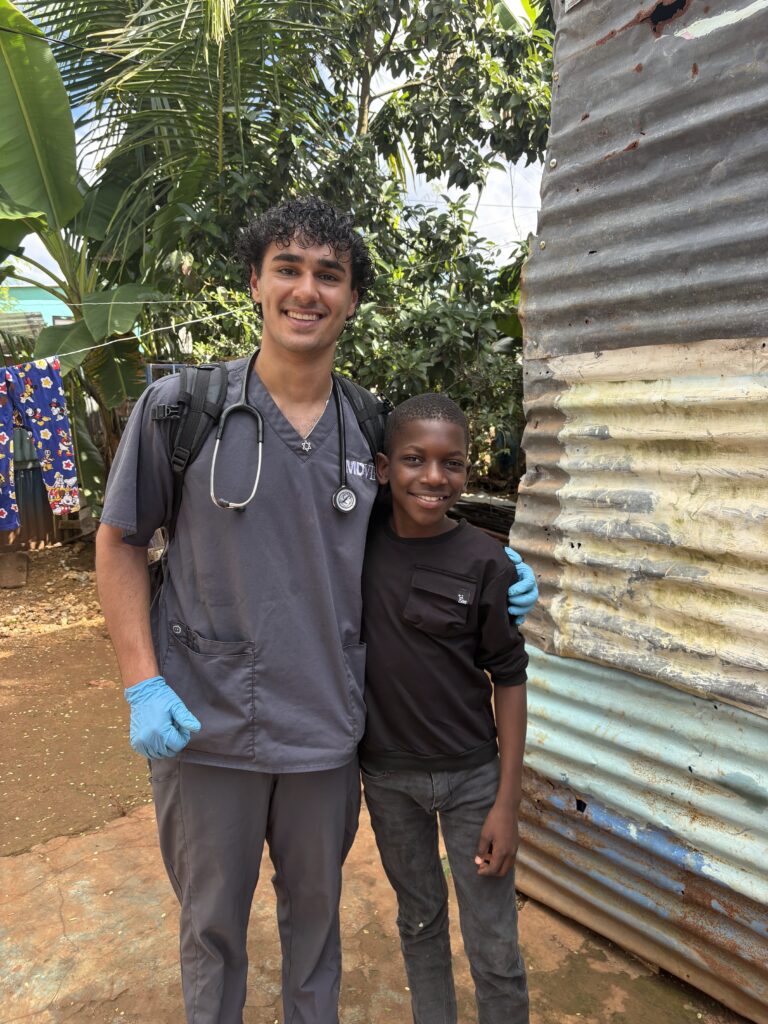
Vinny: “Seve, one of the leaders of the Guanin Foundation, encouraged us to explore why so many community members seemed to be constantly ill, often with flu-like symptoms. During our home visits, we saw realities that helped explain it—floors inside homes were the same material as the ground outside, bathrooms often lacked sinks, and many families had limited access to sanitation. Seeing these conditions firsthand shifted my perspective and helped me understand that illness can be driven by someone’s environment just as much as it is by the medical issue itself.”
Jackson: “During the first day of clinicals at the Center, I met a 12-year-old boy named Deron who had a foot infection that made it very difficult to live his day-to-day life. He was very intelligent and was translating from Kriol to Spanish for his mother and little sisters. I helped him get access to antibiotics to help improve his condition. Two days later, during our home visits, I ran into him and his family again. He immediately ran to hug me and showed me that the infection on his feet had improved significantly. Derson decided to follow me around for the rest of the home visits, watching me take vitals and helping me translate to Spanish. He told me all about how he wanted to become a pilot and travel the world because he’s never left his community before. As we wrapped up the day, he gave me his mom’s WhatsApp number so we could continue talking when I’m no longer in the Dominican Republic.”

How did supporting clinics, triaging patients, and delivering medicine deepen your understanding of healthcare access disparities?
Vinny: “Supporting clinics, triaging patients, and delivering medicine made healthcare access disparities feel real. I saw how cost, distance, and limited resources make it difficult for families to get care. Triaging also showed me that even when someone needs surgery, that care may be out of reach, especially for Haitian community members who face additional barriers to hospital services, including documentation requirements and fear of immigration enforcement. Delivering medicine reminded me how meaningful treatment is when access is limited. It also deepened my respect for the physician serving this community who consistently donates his time, as well as everyone at the Guanin Center whose daily commitment makes a real difference for families who otherwise might go without care.”
Jackson: “Supporting clinics, triaging patients, and delivering medicine deepened my understanding of healthcare access disparities by showing me how limited resources can significantly impact patient care. I saw that factors such as geography, cost, and provider availability often determine whether individuals receive timely treatment. Working directly with patients who had little to no access to health care before our visit highlighted how many people rely on outreach clinics for even basic medical needs. This experience helped me better understand the importance of community-based care in improving access to healthcare.”
In what ways did you rely on each other as brothers during the 10-day trip?
Both Vinny and Jackson: “During the 10-day Bridge to Guanin trip, we relied on each other as SAE brothers to stay grounded and accountable. Being in a new community with new people naturally brings uncertainty, so we constantly checked in, kept each other focused, and stepped up when either of us needed a break. As the only SAE members on the trip, we leaned on our brotherhood even more, from problem-solving on the fly to making sure we showed up each day prepared to serve the community to the best of our ability.”
How do you feel you represented your chapter and SAE as a whole while serving abroad?
Both Vinny and Jackson: “Our SAE chapter at the University of Connecticut, and SAE nationally, values service, professionalism, respect, compassion, and inclusion. To represent those values abroad, we made a conscious effort to lead by example through respectful, meaningful interactions with patients, local healthcare workers, and community members, always showing up prepared and ready to help in any way we could. We also prioritized inclusion: when we noticed a local community member, Alfred, watching us play basketball at the local court, we immediately invited him to join us, and throughout the rest of the trip, we consistently made an effort to play with Alfred, fostering a long-lasting bond we will cherish. Overall, we believe our actions reflected SAE’s integrity and brotherhood while making a positive impact beyond our own campus community.”
How did this trip reinforce what it means to live as a True Gentleman?
Both Vinny and Jackson: “This trip reinforced what it means to live as a True Gentleman by reminding us that service, humility, and respect for others are actions, not just ideals. Providing healthcare to the Guanin community in the Dominican Republic showed us the importance of using our time and abilities to help those in need without expecting anything in return. It strengthened our sense of responsibility to lead with compassion and integrity, especially when working with people from different backgrounds. Ultimately, the experience emphasized that being a True Gentleman means serving others and making a positive impact beyond ourselves.’
How has this experience influenced your academic, professional, or service-related goals?
Both Vinny and Jackson: “This trip solidified our passion for working in healthcare and serving underserved communities, and it strengthened our desire to continue participating in service trips abroad as we advance in medicine. Professionally and personally, being surrounded by students outside of SAE, who brought different perspectives but shared the same commitment to helping others, pushed us to carry SAE’s values into spaces beyond our organization by leading through our actions. Academically, the experience reinforced our motivation to excel and stay disciplined, aligning with SAE’s emphasis on scholarship and personal growth.”

Building Opportunity Through Baseball
While in the Dominican Republic, Vinny and Jackson also learned about an exciting goal at the Guanin Center, building a dedicated baseball field for the local community. They quickly saw why this project matters so much. In the Dominican Republic, baseball can be a real pathway to opportunity, with many professional players coming from the country. On the drive to a clinic farther away, they even passed American MLB team facilities set up specifically for recruitment, showing just how real those opportunities can be.
A field at the Guanin Sport Center in La Piedra would provide kids with a safe, structured place to play, grow, and stay active. The goal is to create youth baseball clubs with regular practices, after-school programs, and local leagues for children and teens. Through sports, these programs would help build discipline, teamwork, leadership skills, and healthy habits, while also keeping kids engaged in positive activities.
Vinny and Jackson saw that the field would be about more than just baseball. It could also serve as a multi-purpose space for the entire community, hosting practices, friendly games, fitness activities, and events organized by the Guanin Project. Games could bring families and visitors together, and even attract scouts, potentially opening doors for young athletes and changing the course of their lives.
How to Support the Mission
One of the Guanin Center’s major goals is to raise $100,000 to build this baseball field, a project that could create life-changing opportunities for the children of La Piedra. Contributions of any size help move this vision closer to reality — providing not just a place to play, but a space that fosters growth, mentorship, and hope for the future. Supporting this effort means investing in youth development, community strength, and opportunities that can extend far beyond the field.