
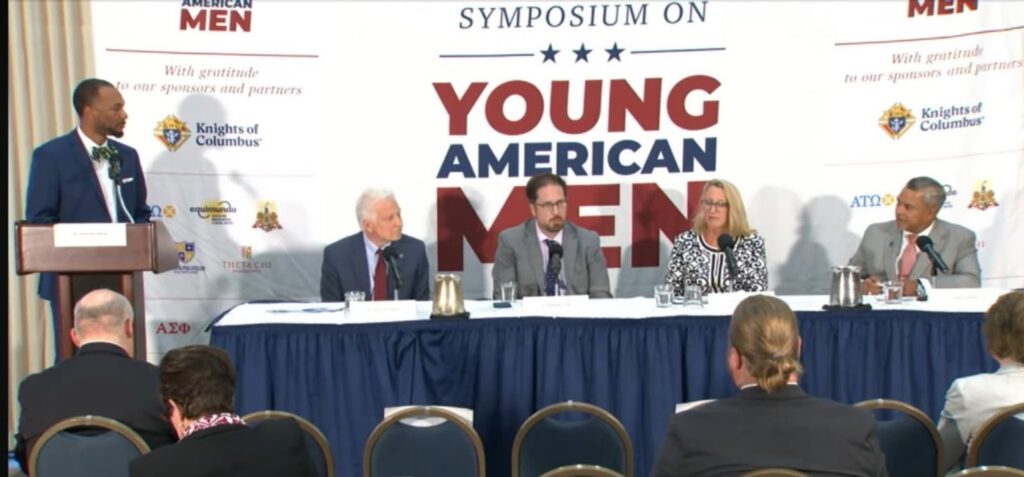
Young men today face growing pressures that often go unseen, challenges around identity, mental health, social isolation, and a search for purpose. The Symposium on Young American Men brought these issues to the forefront, offering solutions through the insights of influential voices across the nation. The event convened U.S. senators, social scientists, medical professionals, faith leaders, fraternities, higher education professionals, and policy experts to examine how society can better support young men.
Dr. Anthony Mack (North Florida ’11), Director of Chapter Services for Sigma Alpha Epsilon, moderated a panel discussion titled “The Campus Challenge: How Higher Education Can Better Serve Male Students.”
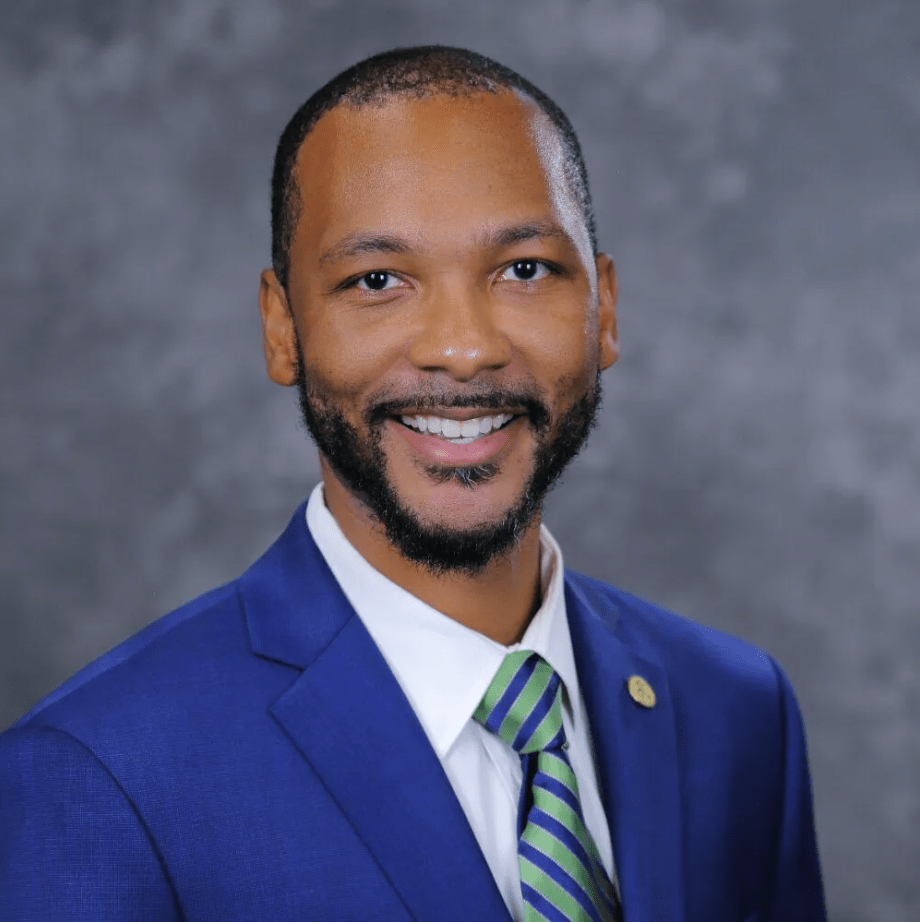
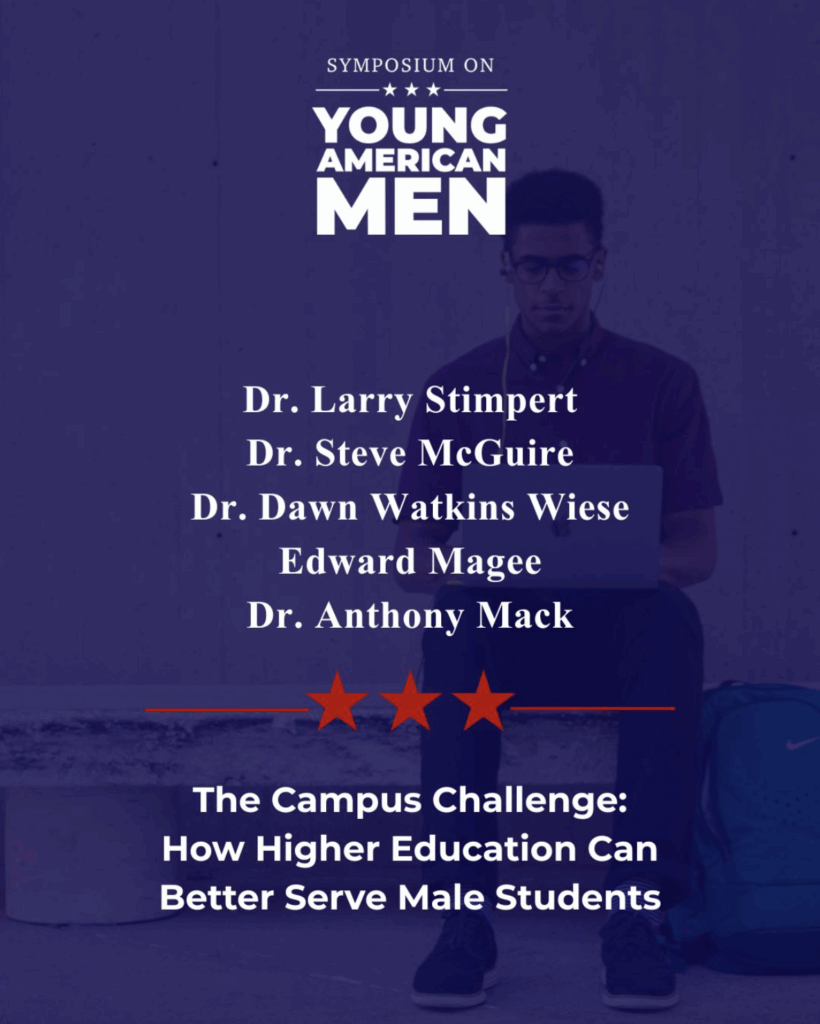
The panel explored strategies to reverse declining male enrollment and improve academic outcomes by expanding single-sex spaces, refining recruitment efforts, and fostering campus environments that encourage healthy expressions of masculinity. Panelists also examined how universities can build male-focused support programs, protect student rights under Title IX and due process, and cultivate cultures where young men feel valued, supported, and empowered to succeed both academically and personally.
The Symposium agenda included the following sessions:
Polling Presentation
In October 2025, Cygnal, one of the country’s top-rated political pollsters, performed a nationwide survey of more than 1,000 male respondents ages 16 to 28 to learn about their behaviors, sentiments, and preferences. They provided an exclusive overview of their findings for Symposium participants.
Speaker: Alex Tarascio, Pollster and Principal, Cygnal
“Breaking the Silence: Addressing Young Men’s Mental Health Emergency”
This panel confronts the alarming mental health crisis facing young American men, including skyrocketing rates of depression, anxiety, and suicide among college-aged males. The discussion examined the cultural and social barriers that prevent young men from seeking help and explored how community-based solutions can provide the necessary support to save a generation of men.
Panelists: Brian Heilman (Movember), Dr. Sally Satel, MD (Yale School of Medicine), Dan Kain (Brotherhood DMV), Cole Lyle (American Legion)
Moderator: Kathryn Jean Lopez (National Review)
“Restoring Resilience in the Digital Storm”
This panel explored real-world strategies and public policy proposals to help young men develop healthier relationships with gaming, social media, chat servers, and emerging AI technologies. The discussion explored evidence-based approaches for establishing productive digital boundaries and utilizing technology to achieve positive outcomes, rather than merely passive consumption.
Panelists: John Cusey (Institute for Families and Technology), Saul Malek, Michael Marinaccio (Center for Responsible Technology), Del. Josh Thomas (D-Gainesville, Va.)
Moderator: Chris Moody (Appalachian State University)
“Building Prosperity for Young American Men”
This panel examined structural barriers preventing young men from thriving economically and explored practical solutions, including expanding access to skilled trades, strengthening education-to-employment pathways, removing barriers to entrepreneurship, and addressing regional disparities. The discussion focused on how economic insecurity intersects with broader challenges, including mental health and community belonging, while identifying practical policies that can restore economic hope and independence.
Panelists: Sen. John Cornyn (R-Tex.), Dr. William Beach, Dr. Nicholas Eberstadt (American Enterprise Institute), and Patrick Bourke (American Institute for Boys and Men)
Moderator: Kate Odell (Wall Street Journal)
“Meaning and Belonging: Building Strong Male Connections in an Age of Isolation”
This panel explored how young men can forge authentic bonds across socioeconomic, racial, and cultural divides through shared purpose and common ideals. The discussion examined successful models—from military service and athletic teams to volunteer organizations—that unite men from diverse backgrounds around goals rather than demographics. It also considered how men facing adversity can overcome long odds with the support of a strong community. Panelists highlighted practical strategies for creating inclusive male spaces where character and commitment are valued most.
Panelists: Sen. Ruben Gallego (D-Ariz.), Antong Lucky (Urban Specialists), Wynn Smiley (Alpha Tau Omega), and Col. Lance Van Zandt (U.S. Army, Ret.)
Moderator: Marc Caputo (Axios)
“What Young Men Need and What Policymakers Can Do”
This panel examined exclusive survey results capturing the perspectives of young American men on their own lives, including their feelings about time spent online, job prospects, personal relationships, and overall well-being. Following the data presentation, a group of experts discussed concrete policy proposals to address the challenges revealed in the polling, exploring initiatives ranging from mental health access and educational support to workforce development and community engagement programs.
Panelists: Alex Tarascio (Cygnal), Akash Chougule (Foundation for Research on Equal Opportunity), Gonzalo Schwarz (Archbridge Institute), and Dr. Taveeshi Gupta (Equimundo)
Moderator: McKay Coppins (The Atlantic)
“The Role of Faith and Civic Institutions in Restoring Male Community”
This panel examined how religious groups, volunteer organizations, fraternities, and other civic associations provide young men with mentorship, moral frameworks, and opportunities for meaningful service. The discussion explored how these institutions can adapt to engage a generation skeptical of traditional involvement while maintaining the core elements of ritual, service, and community that effectively foster male development and a sense of belonging.
Panelists: Sen. James Lankford (R-Okla.), Michael DeVaul (YMCA), Patrick Kelly (Knights of Columbus), Larry Wiese (Kappa Alpha Order)
Moderator: Mike Mayer (Theta Chi Fraternity)
“The Campus Challenge: How Higher Education Can Better Serve Male Students”
This panel explored strategies for reversing declining male enrollment and enhancing academic outcomes, including expanding single-sex spaces, targeting recruitment efforts specifically at young men, and establishing campus structures that welcome rather than discourage healthy expressions of masculinity. The discussion centered on how universities can develop male-focused support programs, safeguard student civil liberties, navigate Title IX and due process issues, and foster campus cultures that value and support young men in their academic and personal development.
Speakers: Dr. Larry Stimpert (Hampden-Sydney College), Dr. Dawn Wiese (FRMT, Ltd.), Dr. Steve McGuire (American Council of Trustees and Alumni), Edward Magee (Belmont University)
Moderator: Dr. Anthony Mack (Sigma Alpha Epsilon)

The Lafayette Company immediately released key takeaways from data that pertained to yesterday’s dialogue. You can find those references and date points here.
Amid shifting models for manhood and widespread withdrawal, males ages 16 to 28 report the pains of disconnection.
- MENTAL HEALTH: 57% of respondents said their mental health is just “fair,” “poor,” or “very poor.”
- FRIENDSHIPS: 48% of Gen Z males have two or fewer friends, with 11% having no friends at all.
- COVID EFFECT: 36% of young men say they’re less socially engaged compared to pre-2020, and 41% say their mental health has worsened.
- MENTORS: 40% of young men said they don’t have a male mentor.
- GUIDANCE: 17% of respondents
- AFFILIATION: 35% of males ages 16 to 28 are not affiliated with any organized group (e.g., religious congregation, intramural sports team, online community, political or volunteer organization, educational association).
Gen Z males spend a vast amount of their free time online and do so at the expense of forging personal connections.
- ONLINE ACTIVITY: 50% spend five or more hours a day online streaming, gaming, browsing, and using social media. 27% dedicate more than six hours each day to recreational online activities.
- YOUTUBE USAGE: 45% spend three or more hours per day day on YouTube alone with 11% spending more than six hours each day on the streaming site.
- VIDEO GAMES: 53% of respondents ages 16 to 28 play video games daily. 36% do so in excess of two hours per day.
- FREE TIME: Young men say their top three ways to spend free time are gaming (43%), tv/streaming (37%), and music/podcasts (26%).
- PERSONAL CONNECTIONS: 48% of Gen Z males can be classified as “low social,” spending between zero and five hours per week in-person with friends or participating in social activities.
Young men who do best are affiliated with single-sex groups or organized activities, practice religion to any degree, and regularly exercise.
- ORGANIZATIONAL PARTICIPATION: Males ages 16 to 28 who participate in single-sex and co-ed organizations that span interests, hobbies, and religious identities have more social connections and better mental health than non-affiliated peers. They assess their mental health more positively (46% positive, 22% negative) compared to peers who are not affiliated with any organization (32% positive, 31% negative). They are significantly more likely to say their lives are going the way they had envisioned (57% affiliated, 37% non-affiliated). Across the board, affiliated men are significantly more likely to engage in behaviors known to catalyze positive outcomes, like having a male mentor (61% affiliated, 42% non-affiliated) and maintaining friendships (57% of affiliated males have three or more close friends, compared to 36%of non-affiliated men). They’re also more likely to limit recreational online hours (23%of affiliated men spend more than six hours online daily, compared to 33% of non-affiliated men) and spend more time engaging in in-person activities (55% of affiliated men spend at least six hours each week socializing with others, compared to 36% of non-affiliated men).
- COLLEGIATE FRATERNITY: Those who belong to a fraternity on a college or university campus overwhelmingly report good mental health (53% positive, 14%negative) compared to young men overall (41% positive, 24% negative). They are significantly more likely to say their lives are going the way they had envisioned they would (61% fraternity, 37% non-affiliated). They’re very likely to have a male mentor (71% fraternity, 42% non-affiliated) and maintain close friendships (64% of fraternity men have three or more close friends, compared to 36% of non-affiliated men). They’re also more likely to limit recreational online hours (19% of fraternity men spend more than six hours online daily, compared to 33% of non-affiliated men) and spend more time engaging in in-person activities (68% of fraternity men spend at least six hours each week socializing with others, compared to 36% of non-affiliated men).
- ROLE OF RELIGION: Young men who identified as religious, regardless of degree of observance, also have strong social connections and well-being. Respondents who regularly or sometimes practice their religion report stronger mental health (52% and 50% positive, 15% and 19% negative, respectively) compared to irreligious peers (32%positive, 33% negative). Their lives are going the way they expected (59% and 61%, respectively), while 42% of non-practicing men said the same. These individuals spend less time online (23% of regularly religious and 21% sometimes religious men, compared to 33% of non-religious men, spend in excess of six hours of online daily) and are more likely to socialize in-person for at least six hours weekly (58% of regularly religious and 60% sometimes religious men, compared to 38% of non-religious men).
- EXERCISE AND WELL-BEING: Respondents who exercise regularly report better mental health (48% positive, 20% negative) and are significantly more likely to say their lives are going how they expected (55% for those who exercise, compared to 27%for those who never do). These young men have a strong friendship network (54% said they have three or more close friends, compared to 28% for young men who don’t exercise), and they spend more time interacting with others in-person than those who don’t exercise (54% dedicate six or more hours weekly, compared to 19% of non-exercisers). They also limit their online recreation, with just 22% considered “high” users (more than six hours a day), compared to 42% of those who don’t exercise at all.
To watch the full livestream, you can find the link here.